beautiful home right......

beautiful home right......

Monday, September 1, 2008

Buying a new mattress


* When shopping for a mattress wear shoes can come and go with ease.
* Proof of placement mattress whole body in bed. Try out as if going to use, and spend some time on it to see how it really feels. If you feel silly, just think how silly you will feel when they do not sleep comfortably after spending all that money!
* Keep in mind the size of the wire, as well as having the coil. The smallest is the #, the heavier the wire.
* Always purchase box springs at the same time. They are made for a set.
* Use a heavy duty bed frame with good support centre.
* Stick with a brand name.
* Do not assume that a higher price means a better mattress.
* Stay away from department stores - are always higher and sometimes the name brand companies to mattresses to fit the store's specifications. It may not be receiving the mattress you think you are. Look for a mattress warehouse or factory.
* Remember that all "pillow top" mattresses get impressions body (except latex padding.)
* Make sure your mattress does not guarantee a proportion of 10 years.
* Shop around, compare prices for delivery, and whether the company will remove your old mattress for you.
* Buy a mattress with a minimum of 312 coils (good for children), with 540 being the best. Full size must be at least 300, queen-size at least 375 and king-size, at least, 450.
* Check the specifications of factory nearby.
* For the bed to be right, should yield enough for you to sink slightly, but not too, in bed. Lying on the mattress, preferably with your partner to sleep, before buying. You will not be bouncing up and down on the edge of the mattress with which we get home!
* For a dry bed, choose a mattress with comfort layers of latex and insulation pat fact coconut fiber. Stay away from wool wool, because the mold can grow when wet that could trigger asthma.
* One must be an innerspring mattress at least nine inches thick. Do not buy budget when you're buying a mattress. A good mattress that will last for 10 to 15 years and will end costing only pennies a night, even in high-end prices. Shop smart, but not scrimp.

Mattress Conditions

* Foundation - absorbs the shock of daily use and provides support and durability.
* Core - provides support for the body and may be spring, air, water or foam.
* Upholstery - adds comfort and cushioning.
* Conde coil - the number of coils in the mattress. High coil count gives better edge lower, while in case of having firmer coil.
* Contour - how the mattress coils conform to the body for comfort.
* Box Spring - supports the mattress and cushions.
* Innerspring - the center of the mattress support composed of hundreds of rolls of wire is held together by yarn or fabric.
* Wire caliber - thick coils of wire. The wire thicker, less flexible coils.
* Comfort level - may vary from one manufacturer to another with Plush be soft and spongy, firm Standard and Pillowtop be stuffing a mattress with additional layers of cushioning.
* Not prorated warranty - a manufacturer's warranty against defects.
* Pro-rated warranty - offers less coverage depending on the number of years in the warranty.

Need for a new mattress?

If you are not getting a good night's sleep could be due to a worn mattress. You are ready for a new mattress and box springs if:

* Your mattress was lumpy, bumpy, sagging or uneven
* Your mattress is 10 to 15 years old
* You wake up every morning with aches and pains or feeling tired
* Your mattress or makes noise when you lie down sways
* You and your partner sleeping fall into the "hole" in the center
* Your mattress has signs of wear, is torn, has stains or smells like mold or mildew

Caring for your mattress

* Turn your new mattress as indicated by the manufacturer. The rotation every few weeks to help maintain a body dash in the mattress. Turn the box springs too.
* The vacuum mattress regularly.
* Soap and water will most stains.

Furniture Restoration


Furniture Restoration

These tips will help restore antiques after a fire or water damage.

Damage caused by water

* Dry the piece was entirely for putting them into an area slightly warm with a constant temperature of about 70 degrees Fahrenheit and the constant movement of air.
Note: If the place is too hot, wood dries too fast and crack. If it is too cold, too dry slowly and stop mildew on the wood.
* Begin the drying process immediately or water will seep into the wood and cause more damage.

The elimination of white spots

* Rub with a damp cotton cloth and a buffing solution composed of a toothpaste and 50/50 mixture of baking soda.
* Buff the area with another cloth.
* If this does not remove stains, a professional process that will be used. (Hyperlink to catering)

The elimination of black spots

Black spots indicate that water has eaten through the finish and wood where mold is growing. The goal must be completely eliminated and wood should be treated with chlorine to kill mold before a new finish is applied. You may need professional help to remove black spots.

The repair sheet metal buckle

* Using a hypodermic syringe needle, inject a base of blue water diluted with 10 percent of water between furniture and the base plate buckle.
* Set the plate to the piece using a plastic sheet and a block of wood at the top of the sheet.
* Let dry well before withdrawing.

Fire Damage

If your ex has suffered extensive blistering and song should be stripped completely and Refinish. For small facelifts, follow these steps:

Small localized burns

* Implement a professional Refinish the place with a cotton swab.
* Scrape off the charred section of the piece with a penknife.
* Apply a clear finish painting or the site in small doses until the ground coincides with the appearance of the piece.

Getting rid of the smell of smoke

To remove odors of smoke inside the cabinet or drawer, put little to cool the air inside the cabinet and the wood will absorb the scent of freshener.

Taking good care of wooden furniture


Taking good care of wooden furniture


* Shoe polish and felt tip pens work well in hiding small scratches on the furniture. Shoe polish applicator bottles work well for furniture touch-ups, when filled with stains.
* Color rings left on the tables of cups and glasses of roughing lightly with an abrasive pad or paper and then rubbing with cigarette ashes mixed with cooking oil.
* Has furniture Deluxe (buffing and polishing) from a professional once or twice a year.
* Keep the goal rejuvenated by cleaning with a mild soap (like you would wash your hands) that has been diluted.
* Avoid using a household cleaner containing ammonia.
* Pulido your furniture once a week with a quality Polish also help protect a finish of the damage.
* Be careful not to use a Polish containing silicone or alcohol. Alcohol is a basic ingredient in some strippers and if included in a Polish can actually damage the finish.
* To protect the finish of your dining table, a table pad at the top of the table when not in use. Table pads are relatively inexpensive and can be ordered in any shape and size.
* When the plates and dishes that are hot, use a tablecloth.
* Position of furniture so that is not exposed to direct sunlight. Sun dried wood.
* To prevent water sounds, coaster always easily accessible. One of the best coasters using wood is one who has felt and below an absorbent material for the remainder of glass. Metal coasters tend to sweat on the table, and chemicals in a plastic coaster may react with the high technology used in furniture finishes today. It is also helpful if the coaster has a slight ridge outside to capture any condensation from the cup.
* Stains water should be left to dry completely. Then place the regular mayonnaise, not sandwich spread, in a soft cloth and rub on the watermark. In most cases it will disappear.
* When burning candles, use a large felt with a protective plastic higher. Candles wax does not work as much when it hits the plastic. If you drip wax on a table, wait until the wax has cooled and hardened. Then, apply an ice cube directly to the wax and give him time to wax hard and brittle. Take a plastic spatula and gently remove the wax cold. Then the Polish table with a clean cloth and a good cream Polish furniture. Buff that all remaining waste.
* Minor scratches can often be disguised using a product cover zero. Simply apply the product with a clean cloth and rub lightly during zero.
* Make Polish furniture by mixing lemon oil with 3 parts olive oil.

Sunday, August 24, 2008

To protect their children from lead poisoning

To protect their children from lead poisoning

All children are at risk of being exposed to lead. Know the facts in order to protect your child from lead poisoning.

The most common causes of lead:

* Lead-based paint. (If your home was built before 1980 there was a 75% chance that have lead paint.)
* Ceramic pottery, bone china, glass or earthenware dishes lead
* Tap water
* Dust the house
* The dust and soil near roads and industries

Occupation and hobbies related to lead exposure:

* Plumbing and installation of pipes --
* Automotive and body shops
* Vidrieras
* Home construction or remodeling

Symptoms of lead poisoning:

* Irritable or restless behavior
* Tired much
* Often patients with stomach
* Has lack of appetite
* Sleep problems

Effects of lead poisoning:

* Low IQ scores
* The speech and hearing difficulties
* Learning Disabilities
*Poor motor skills
* Anemia
* Death

What you can do:

* Start screen their children when they are 6-12 months old.
* Ask your doctor how often you should have follow-up checks for lead exposure.
* Keep your home safe from lead.
* Do not let children eat paint chips, dirt or dust.
* Before sanding a painted or varnished surface, the surface wet.
* Having a professional to remove lead paint from their homes.
* Keep children away from areas where the removal of lead paint is being carried out.
* Scanning wet floors instead of sweeping.
* Vacuum carpets often.
* Remove clothing when you get home if you're in a major risk profession.
* Wash your work clothes separately from other clothing.
* Run cold tap water for at last one minute before use, especially in the morning.
* Feed children foods rich in calcium and iron.
* Feeding children of low-fat.
* Foster washing hands before each meal, before bed and after playing outside.
* Leave shoes at the door.
* Keep children's toys clean.
* If you suspect may have lead contamination in your home, call your local health department.
* Keep this 24-hour Lead Hotline number at hand - 1-800-LEAD-FYI.


April Garden checklist

April Garden checklist

In most places, it is quite safe to start thinking about gardening in April rolls around. Here's your garden April list.

Since early April

* Plant some peas. They are easy to grow and add great taste to all kinds of dishes.
* If the danger of frost is more in your area, plant fuchsia, geraniums and pelargoniums.
* Start the optical until planting annuals and perennials.
* You do not have space in the vegetable garden? Consider using containers of tomatoes, eggplants, cucumbers and green peppers.

In mid April

* Do you have roses? Now it's time to feed the increasing number and size of their flowers.
* If you know of dry spots in your garden, plants resistant to drought, as attractive shrubs crap myrtle, laurel, lavender and wild rosemary.
* On sunny, warm places in the garden trying geraniums.

Mid-to late April

* Gardenia plant shrubs in a warm and sunny corner of smell sweet and lovely flowers. Try planting under a window for special treatment when the breeze blows!
* Begin mulch around shrubs and flowers annually to conserve moisture and reduce weeds.
* Want great color? Try planting petunias about today. For more flowering, leaving dead flowers every day.
* If deciduous flowering shrubs have flourished, is the best time to prune.
* When camellias, azaleas and rhododendrons blooming stop, food acid fertilizer.

End of April

* Feed the lawn.
* Prune the flowers, shrubs and trees.
* Watch for moth damage.
* Control slugs, aphids and earwigs.
* Plant seeds and seedlings.

Tips for saving water - inside and out

Tips for saving water - inside and out

Using the excess water to leak or that can cost hundreds of dollars a year in wasted water. A simple toilet leak can use extra 50 gallons of water a day, and a faucet leak can waste up to 5000 gallons per year. We have some tips to keep bill that the water below.

Saving water indoors

* Do you think there might be a leak? Check by reading their water meter before and after a 2-hour period when the water has not been shot in his home. If reading is not exactly the same, you've got a leak.
* If you have a good water system and the pump comes in when no one is using water, you have a leak.
* Find out if the bathroom is leaking to put a few drops of food coloring in roses. If the color leak in the dish, replace the trap.
* Get repaired leaking faucets. It is usually a simple matter of replacing worn washers. Check all washers at home and replace them all at once.
* Replace "sticky" deals with toilet.
* Make sure the flapper ball in the tank seats correctly.
* Do not use the toilet as a trash can or ashtray. Avoid washing.
* Install faucet aireadores to stem the flow of water.
* Rinse vegetables in a large bowl and reuse of what would have ido down the drain water to plants.
* Keep drinking water in the refrigerator to prevent runoff water until cool enough to drink.
* Thaw food in the microwave instead of under running water.
* Insulate the water heater and water pipes. (65% of water used is hot water.)

Saving water in the bathroom

* Do not let the water run continuously when you're shaving, brushing teeth, etc.
* Replace two systems to operate with a single lever faucets.
* Shower instead of bathing.
* Installing low-flow showers to reduce water consumption to half but still give a great feeling shower.
* Get a shower with an "out of the shower" to conserve water while you lather.
* Take shorter showers. Five minutes showers per day for a four family members on the use 28000 gallons of water per year.

Saving water in cleaning

* Major standard washing machines use up to 50 gallons of water per load, newer models use only 11-30 gallons.
* Do not wash half load, and if it does, adjust the water level.
* Presoaking avoids having to re-wash clothes very dirty.
* Soak the dirty dishes instead of rinsing each dish separately.
* If you're washing dishes in a double sink, wash them all at once and rinse them all at once.
* Replacing an old, inefficient water dishwashers. You can save 10 to 20 gallons of water per wash cycle.
* Select saving water in your dishwasher cycle.


Saving water outdoors

* Landscape with plants that require less water.
* Do not overwater. Buy an indicator to measure the rain gives your lawn.
* Water lawns during the time of day when temperature and wind speed are the lowest to reduce evaporation.
* Put a timer on your sprinklers so they do not forget to shut down.
* Over-fertilization of your lawn increases the need for irrigation. No more feed.
* Use a soaker hose rather than a sprinkler system to better target their water plants.
* Mulch plants and to retain moisture.
* Make sure your sprinkler system is not watering the sidewalk, driveway or street.
* Set your lawn mower blades to 3 inches or more to encourage grass roots grow deeper and hold moisture better.
* Use water-saving filters in your pool.

Tips on allergy-proof your garden

Tips on allergy-proof your garden


Get the red itchy eyes and runny nose again? Breasts clogged? Estornudar all the time? Perhaps it is those horrible allergies. Pollen is the cause of the plants and some are worse than others about the spread of things around. Here are some tips for allergy-proof your yard and allergy-smart gardening.

* The very bright flowering plants cause less problems with allergies, since they depend on insects to transfer pollen.
* The plants that rely on wind to spread pollen produce large amounts of pollen.
* The rain helps wash the pollen from the air, but also generates mold, mildew and weeds. If you are allergic to mold, avoiding the garden after a good rain.
* Keep your garden weed and keep the grass cut short.
* Wear a mask when gardening or doing lawn work.
* Wear long-sleeved shirts and pants and wash them when finished.
* Avoid gardening in the early morning or at dusk when pollen counts are highest.
* Keep the yard and garden free of weeds such as ragweed, ports, English and lamsquarters banana.
* Protect your eyes with goggles or sunglasses.
* Take a shower when it comes from the courtyard.

Plants to watch out for:

* Man juniper
* Fruitless mulberries
* Seedless ashes
* Cottonless cottonwoods
* Elm, sicómoro, olive, oak, walnut, maple, birch, ash, willow and pecan trees
* Privet hedges and Cypress
* Bermuda grass
* Bluegrass
* Artemisia
* Amaranth
* Sorrel

Plants not aggravate allergies:

* Fruit of blackberry, pear, silk, magnolias, palms, Redbud, spruce and yew
* Azalea, laurel, cassava, Pyracantha and hibiscus shrubs
* Cacti
* Lilies
* Iris
* Tulips
* Crocus
* Hyacinths
* Daffodils
* Chrysanthemums
* Roses
* Bougainvillea
* Helechos
* Orchids
* Gladiolas

Improving energy efficiency in your home right now

Improving energy efficiency in your home right now

An energy-efficient home is not only cheaper, is also healthier. The causes of poor air quality such as humidity, drafts, windows in the winter cold or hot windows in the summer, is lessened by all the improvements in energy efficiency. Here are some more tips on maintaining your home healthy and efficient.

Kitchen

* Defrost your freezer if the ice is 5 mm thick.
* Keep refrigerator condenser coil free of dust vacuum frequently.
* Make sure the door seal magnetic in the refrigerator does not leak
* Make sure the on / off cycle of your refrigerator is working properly.
* Use the kettle, not the microwave to heat small amounts of water.
* Use only the amount of water needed in the kettle.
* Keep cold water in the refrigerator for drinking.
* Use cooking utensils that have a flat base and strong sealing lids.
* Check the oven heat to seal leaks.
* Run only full loads in the dishwasher.

Laundry Room

* Set the water heater thermostat to no more than 65 degrees centigrade.
* Insulate hot water pipes.
* Turn off the hot water system if you go on vacation.
* Repair leak of hot water faucets.
* Have water heater monitored regularly by a professional.
* Use cold water to wash clothes whenever possible.
* Do not overload the dryer.
* Clean the lint filter in the dryer after each use.

Special tip cleaning Miniblinds

Special tip cleaning Miniblinds


When the sun begins to shine in the windows, you can really see the dust of winter in miniblinds. The powder is also a risk factor for health problems, so it will take some time to get all the miniblinds sparkling clean and dust free. Here are some tips to make it easier:

* Put your hands into a pair of socks instead of using a cloth.
* Dip one hand in a bucket of warm, soapy water and keep the blinds in his hands.
* Rub back and forth until the surface is clean.
* Investing sides so the sock dries dry blinds.
* Wipe the blinds with a damp fabric softener sheet to eliminate static. (Static collects dust.)

Or you can take the blinds and cleaning this way:

* Take the blinds and take them outside.
* Lay in an old blanket - preferably in an inclined surface of the yard.
* That the blinds all the way and make sure that all lamas are flat.
* Mix up a bucket of all-cleaner or ammonia solution.
* Scrub with a soft brush, and then convert it to the rear.
* For now the blanket is wet and helping to clean blinds and protect them.
* Hang blinds in clothing and hose them off.
* Gentle shaking will help them drip dry.

The bust of dust on Earth-friendly way

The bust of dust on Earth-friendly way

It feels like being a little more environmentally friendly this spring? These are some of earth-friendly cleaning recipes to help:

All Cleaner

* 4 tablespoons baking soda
* 1 quart hot water

Dissolve the baking soda in warm water. Apply with a sponge or spray with a spray bottle. Use to clean and Deodorizer all kitchen and bathroom surfaces. Rinse with clean water.

Drain Cleaner

* 1 cup baking soda
* 1 cup white vinegar
*
Boil water

Pour baking soda down the drain. Add white vinegar and cover the drain if possible. Allow to stand for 5 minutes, then pouring a pot of hot water down the drain. The vinegar and baking soda are broken down into fatty acids and glycerin soap, wash and the stopper down the drain.

Caution: Do not use this method if you have used a commercial drain opener that may still be present in the drain.

Drain Opener

Use a plunger or a snake metal flexible to loosen clogged drains. Do not use harsh or in the presence of toxic chemicals.

Cal and mineral deposit Remover

Soak towels in vinegar then applying cleaning fabrics for lime deposits around the faucets. Leave the cloth there for about an hour. The deposits will soften and can be easily removed.

Oven Cleaner

* Baking soda
* Very fine steel wool

Sprinkle water on the surface of the oven. Apply baking soda and rub using a very fine steel wool. Wipe with a damp sponge. Rinse well and dry.

Toilet Bowl Cleaner

Sprinkle baking soda into the bowl, then pour the vinegar in some scour with a toilet brush. This combination cleans and deodorizes.

Furniture Polish

* 3 cups olive oil
* 1 cup vinegar

Mix well. Use a clean, soft cloth to apply to furniture.

Disinfectant

* 1 cup borax
* 1 gallon of hot water

Caution: Borax is a toxic ingredient. Handle with care and stored safely.

Start your spring cleaning outdoors in the garage


Start your spring cleaning outdoors in the garage


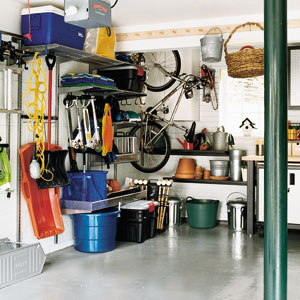
It's easy to make the garage of a "catch-all" space for all those things that really do not have a place to put. Before long, you've got a real mess on their hands, and the garage is not really useful for the maintenance of those things that need to be organized and there is protected from the weather. If you start your spring cleaning in the garage, you can get those garden tools and other items needed perfectly prepared for a season practices access. Here are some tips to organize your garage.
• Organize items you want to keep in separate piles.
• Determine what types of containers will be the best way to store these items.
• Hang pegs to organize certain topics - even lawn chairs can be stored long pins.
• Bicycles can be hung from the rafters when not in use. When bicycles are in use, designate a certain place so that they are parked.
• Keep the number of items from the floor as possible so it is easy to sweep often. (Twice a month is a good time. Remember that dust from the garage often ends in the house.)
• If you have bare studs in the garage, instead of wooden slats across the poles to create buckets of topics such as sports equipment and gardening tools.
• hammer nails in the wall or poles of tools and other items.
• Keep similar items together in containers marked and go through them once a season to clean things you're not using anymore.
• Hang shelves and storage containers marked with items such as toys, tennis balls, nails, lawn chemicals, etc.
• Use hooks rather than nails for items such as clothing outdoors, backpacks, umbrellas, etc.
• Keep the elements needed for the season (rakes, lawnmowers, etc.) near the front of the garage.
• Correa topics such as bats and fishing net together to facilitate storage and transport.
• Take the organization of this opportunity to take stock of the elements needed for spring, as missing garden tools.
• Hang garden hose, spare tires and other equipment unwieldy to avoid accidents.

Saturday, August 16, 2008

Patio Furniture

The choice of the best patio furniture

Furniture can be expensive, and having to replace every few years can be even more so. If you're in the market for patio furniture, does not want to spend all that money just to take the time and make regular use collapses before its time. By taking a little more now to make sure you find the best furniture for your home can save yourself the cost of having to repair or replace a few years away.


Patio furniture considerations

When shopping for patio furniture, which is very likely going to be presented with three options… wood, metal and plastic. Wood Furniture can be beautiful and is usually in terms of climate and outdoor use, although if not properly treated or cared for it can be easily damaged or may suffer from fungus, mold, insect infestation, or even could. Metal furniture is immune to these diseases, although you can get too hot for use at times and can rust if not painted or otherwise treated. Furniture plastic can overcome the disadvantages of the two other types, but they can be much more prone to breakage and is generally more likely to be shifted or high winds blowing outside.

In order to choose the type of furniture that is right for you, think about the kind of atmosphere in the open air to be used as in. If you have children or pets that might be rough with it or simply wants to make sure she can cope to use whatever you have, choose metal or wooden patio furniture. If you want something light and easy to move, choose plastic. You will find that even after reducing their choices to a particular type, there are still a number of specific material and style options available to you.
Do not forget the Cushions

One accessory that is often overlooked when buying furniture cushions is offering a little extra comfort to your family and friends. Measuring the size of their furniture to make sure you do not pick up the cushions that are too large or too small, and choose cushioning materials will be maintained until use and time. Try to choose cushions that do not retain too much water when it rains to help prevent and wet seats.

PATIO

Patio

A patio (from the Spanish: patio meaning 'back garden' or 'backyard) is an outdoor space generally used for dining or recreation that often adjoins a residence and is typically paved. It may refer to a roofless inner courtyard of the sort found in Spanish-style dwellings or a paved area between a residence and the garden.


Patios are typically made of concrete or stone slabs laid over a firm base. This base is often formed of a layer of compacted hardcore (stone chips), a layer of sharp sand, and a layer of cement mortar. The firmness and stability of the base is essential to the robustness of the top layer of slabs - an infirm base will typically result in cracked slabs. Patios that hold a lot of

weight, such as driveways, require stronger foundations than those that are designed for light use.


In Australia the term Patio is often used to mean any kind of outdoor balcony or verandah.(From Wikipedia, the free encyclopedia)

Sunday, August 10, 2008

Professional advice reduces costly mistakes in home improvements

Professional advice reduces costly mistakes in home improvements
Money spent on home improvements does not automatically increase the value of a property, say chartered surveyors. In fact, in some cases, unsympathetic extensions and building works can devalue a property or make it more difficult to sell.


Home owners should make sure they are well informed before they call in the builders.
In a survey published today (7 September) by RICS, the most common types of home improvement have been rated in terms of the value% age they are likely to add to a property.


An information leaflet, Extending your home, has also been published advising people what they need to know before embarking on major building works.
According to three-quarters of chartered surveyor estate agents who were questioned, the main reason people are improving their properties is to upgrade, while a third stated that financial gain was important.


Chartered surveyor estate agents believe aesthetic improvements such as putting in a landscape garden can add 3% to the value of a typical semi-detached property, but laying new carpets and wood flooring in most cases has very little impact on value.
An extension such as a conservatory is likely to add 5% whereas building a basement may only add 2%.


Improving services and temperature control are more worthwhile than people might think. Our respondents believe installing central heating could add 5%, and double-glazing up to 4% to a property's future sale value.


However, the addition to value will not in all cases compensate for costs incurred, as this will depend on the quality of work and other features of the property, such as location and style.


Improvements which can assist in property saleability are:
• Central heating
• Off-road parking
• Adding a conservatory
• Adding a new bathroom or kitchen
• reinstating period features
• Double glazing
• Putting in a downstairs loo


In most cases, converting one type of room into another does not seem to add value.
54% of surveyors believe converting a garage to a bedroom will not improve saleability and 88% believe the same is true of converting a garage to a gym.


RICS spokesman Jeremy Leaf, a chartered surveyor estate agent, says:
"There are three things which motivate people to improve their properties - enhancing their home environment, increasing the capital value of their property, or improving its saleability.


"Most properties provide some potential for expansion either up, out or down but we would advise people to think sensibly about how much they are investing and their key motivator before undertaking major projects.


"It is important to think about the style and age of the property before undertaking any works - mock Tudor features do not sit well in modern properties; likewise contemporary alterations may undermine the integrity of a period home."


"What appeals to some people may not appeal to others and costly disappointments can be avoided with a little prior planning and research."


The basics of where to start planning for a development, understanding planning permission, party wall agreements, building regulations, and how to choose a builder are all subjects covered in the RICS Extending your home leaflet.


RICS spokesman, Graham North building a chartered surveyor, says:
"It can feel like there are so many hoops to jump through before you can start your works, but it is essential you get it right in order to ensure the structural safety and integrity of your home.


"Work that has been undertaken without planning permission, is non-compliant with building regulations or is just shoddy workmanship, may throw a spanner in the works when you come to sell or worse still may need to be torn down."


RICS advise that what ever you decide to do with your home you should seek professional advice and ensure all works are carried out by qualified contractors.


Some advice from RICS estate agents about how to get the most out of a property being improved for sale:
• Do not be tempted to value an improvement over and expect instant high returns irrespective of market conditions
• Know who your target buyers are and improve the house to suit their requirements. Always look for the widest possible appeal
• Most areas have a ceiling price, ie, a maximum sale price you can expect to achieve - bear this in mind. Improving a poor property in a good location is better than improving a good property in a poor location
• When undertaking a basement extension or loft conversion try to keep the style of the new rooms in sympathy with the style of the rest of the property. A modern extension on a traditional property may look odd and lose appeal
• Do not put in cheap laminate flooring. A cheap refurbishment is worse than not doing anything at all
• Make sure that the accommodation provided (ie property size) is balanced with the size of the plot, bigger is not always better
• Do not bite off more than you can chew - stick to a budget and ask the experts for advice.

View more RICS guides at www.rics.org/usefulguides